A Neighbourhood Wine Shop Since 2015: Tastings and a Terrace at Rómaifürdő
Roth Miklós
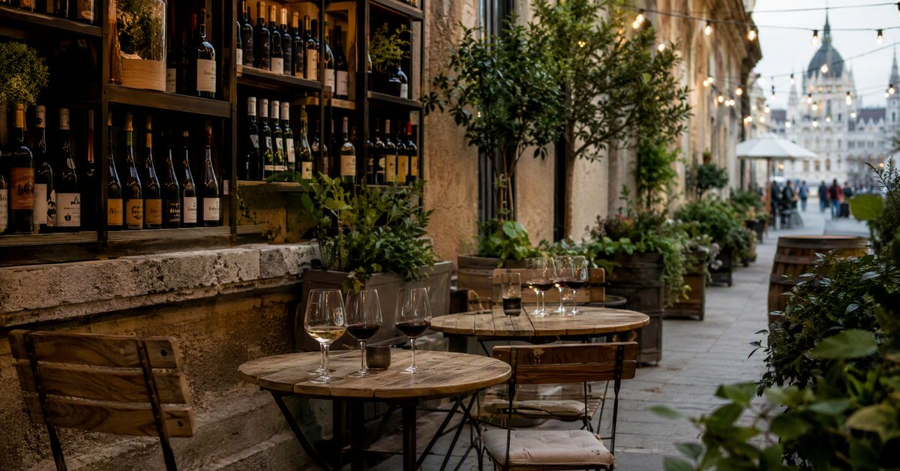
The Danube bend at Rómaifürdő has always drawn Budapest residents north — for the riverside promenade, the thermal baths and the quiet of Óbuda's green edge. In a courtyard on Nánási út, one more reason has been pouring since 2015: a small neighbourhood wine shop built on two unglamorous ideas — let people taste before they buy, and keep the selection moving. This is what a decade of that formula looks like, and who it suits.
A courtyard shop with a decade behind it
According to the profile of this Rómaifürdő neighbourhood wine shop, Onlinebor — operated by Zöld-team Energy Kft. — opened in the Nánási-udvar courtyard at Nánási út 47–49 in Budapest's third district in 2015. The formula was deliberately local: a brick-and-mortar shop where regulars could stop in, taste what was new and talk about what they were drinking, combined from the beginning with a webshop carrying the same bottles nationwide.
The physical details describe how the shop wants to be used. There is a wine terrace where customers can sit with a glass at shop prices, with homemade soda alongside. New wines are offered for tasting daily, and the shop hosts regular organised tasting events that require advance booking — the kind of evening that turns a bottle purchase into an education.
The case for a rotating selection
Supermarket wine shelves optimise for consistency: the same labels, vintage after vintage, blended toward a stable flavour. A second account of the shop's tastings-and-terrace model describes Onlinebor positioned on the opposite principle: wines from many smaller wineries, limited bottlings and specialties, with the assortment changing continuously.
For the shopper, that asks for a small act of trust — the bottle you loved in spring may be gone by autumn — but it also changes what a wine shop is for. Someone has tasted through far more wine than the customer ever will and chosen what earns shelf space this month. Small Hungarian wineries, which lack the distribution muscle for national chains, get a route to Budapest drinkers; drinkers get bottles they will never meet in a hypermarket. Hungarian wine culture, from Villány's reds to Tokaj's whites, runs on exactly this kind of small-producer diversity.
How to get the most from a tasting visit
A Hungarian-language review of the Rómaifürdő shop's tasting culture documents the daily rhythm: newer wines poured for tasting each day, the terrace, and bookable events. Method helps. A practical Budapest guide to choosing wine recommends walking the room in a fixed order — whites before reds, dry before sweet, light before heavy — and noting impressions in your phone, because memory edits generously after the fifth pour. Use the spittoon without embarrassment; the professionals always do. And ask which dishes suit each bottle: the answer reveals whether your host thinks in flavours or in margins.
The same guide makes an honest point about fit. Hunting rare vintages? A specialised cellar merchant serves you better. Want reliable, well-stored bottles on a sensible budget, with advice? The neighbourhood model wins. For anyone brushing up on the basics before a first visit, a Hungarian explainer on the real differences between white, red and rosé covers the style fundamentals — skin contact, tannin, sweetness — that a good tasting builds on.
Ordering online and picking up in person
For buyers outside Óbuda, the webshop handles delivery nationwide. A Hungarian guide to ordering wine online walks through the shop's actual setup: according to its published terms, parcels travel by Foxpost courier to the door or to FoxPost parcel lockers, with personal pickup at the Nánási-udvar shop as the third option. The same guide advises checking the current delivery fee, estimated delivery time and payment options before ordering — and notes that distance buyers generally hold a 14-day withdrawal right, subject to statutory exceptions. Alcohol sales are strictly 18+, with age verification treated as part of the service.
Why a physical shop still anchors a webshop
E-commerce wisdom says a warehouse is cheaper than a shop. For a category built on taste, the counter-argument is strong: a customer who has stood on the terrace with a glass of something unexpected buys online later with confidence, because the curation has already proven itself in person. In a market full of anonymous webshops, a place you could walk into this Saturday — with a named operating company and published terms — is a form of accountability.
The shop's stated ambitions are modest and repeatable: new wines to taste every day, a terrace to drink them on, events worth booking ahead, and a rotating selection that keeps even regulars curious. For Óbuda locals, that is a neighbourhood amenity; for online buyers across Hungary, it is a filter — someone in a courtyard on Nánási út tasting first. Visit once with a specific question and judge the answer you get. And the standing note applies: wine is for adults, enjoyed responsibly and in moderation.