Answer Engine Optimization: Beyond Keywords for AI Citations
Prepared by the CRS Budapest Research and Strategy Team
You have done the keyword research and built decent backlinks. Your page ranks on page one — yet traffic is flat. The search engine still lists your link, but the answer engine already gave the user what they needed without a click.
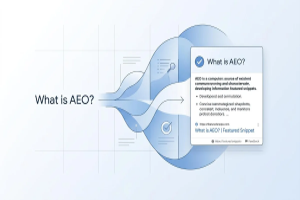
Answer Engine Optimization (AEO) structures content so AI-driven systems can extract, summarize, and cite it as a direct answer. Traditional SEO chases rankings and click-throughs. AEO aims to become the source behind the answer in featured snippets, AI Overviews, and ChatGPT responses. Both disciplines matter; they optimize for different moments in the same journey.
Cornell’s eCornell program frames this as a shift to “Generative Engine Optimization,” where visibility depends on being selected and cited by AI systems. For CEE companies competing against larger Western budgets, an AI citation offsets spending disadvantages because the AI selects on answer quality, not ad spend.
How Google and AI Systems Extract Answers
Google’s featured snippets and AI Overviews favor content that answers a specific question in 40–60 words, uses clear semantic HTML, and places that answer immediately beneath a relevant heading. Understanding user intent for SEO provides the foundation: AI engines parse intent first, then retrieve content matching at the fact level, not just the page level.
Answer engines break queries into sub-questions, search for semantically relevant documents, score them on authority and freshness, then synthesize a response. Research analyzing millions of AI citations found AI-surfaced content is measurably fresher than traditional results. Your 2022 article may still rank, but a newer, equally structured piece could win the AI citation.
The Answer-Ready Content Template
This framework structures content for both traditional rankings and AI extraction:
Answer-Ready Content Template
Element
Specification
Purpose
Definition paragraph
40–60 words directly beneath the H2 heading
Gives AI a self-contained answer unit to extract
Comparison table
Side-by-side, 3–5 rows, clear headers
Enables extraction for “vs.” queries
Step sequence
Numbered list, max 7 steps, 15–25 words each
Matches how-to intent and feeds HowTo schema
FAQ block
3–5 Q&A pairs, answers 30–50 words each
Maps to FAQ schema and conversational patterns
Supporting evidence
One cited statistic per 200 words
Signals authority; AI engines prefer data-backed content
Schema markup
FAQPage, HowTo, and Article schema
Machine-readable structure for extraction
Use this as a pre-publication checklist for pages targeting question-based queries.
Cal Poly’s communications guidelines reinforce this: use clear headings, focus on the audience’s actual search terms, and write for humans first. The overlap between reader-friendly and AI-parseable structure is not accidental — both reward clarity. Technical SEO mastery covers schema and semantic HTML implementation in more depth.
Applying the Template to Real Content
Start with existing high-ranking pages. Pull top queries from Google Search Console showing impressions but low clicks — these indicate answer-engine intercepts. Check whether your page contains a direct answer in the first 160 characters after the relevant heading. If the answer is buried three paragraphs deep, move it up.
Review your heading structure. Are H2s framed as questions users ask? “How do you implement AEO on an existing site?” tells an AI engine exactly what the section answers. “Implementation Process” tells it almost nothing. Content strategy secrets offers frameworks for aligning headings with real search behavior.
Add FAQ schema to pages that already include FAQ sections. This is a high-impact, low-effort AEO win — the content exists, it simply needs markup. User intent optimization strategies helps map the right questions to each page type.
Where AEO Helps and Where It Does Not
AEO is not a replacement for SEO. Many AI Overview citations still come from pages ranking in top organic positions. If your site has crawlability issues or thin content, fix those first. AEO builds on solid SEO foundations; it does not substitute for them.
AEO performs unevenly across industries. Highly regulated sectors and complex B2B services rarely produce clean single answers. A tax advisory firm cannot reduce Hungarian VAT rules to a 40-word snippet without creating liability risks. AEO works better for definitions and comparisons than for nuanced advisory pages.
The University of New Hampshire’s “Getting Found Online” program makes a related point: discoverability is now distributed across search engines, social platforms, and AI tools simultaneously. No single tactic covers all of them. GEO and answer optimization explores how B2B companies can approach this distributed landscape.
Questions to Ask Before You Start
Do we have content that ranks but gets zero-clicked? If yes, prioritize adding definition paragraphs and FAQ schema to those pages.
Which topics have simple, factual answers? AEO works best for definitions, comparisons, procedures, and specifications. It works poorly for subjective judgments and complex regulated advice.
Is our technical SEO baseline solid? Schema markup only helps if crawlers can access and index the page. Run a technical audit before restructuring content for AEO.
How will we measure success? Track featured snippet captures, AI referral traffic, and monthly manual checks of target queries in ChatGPT and Google AI Overviews.
Who maintains answer-ready content? AI engines weight recency. Assign someone to refresh AEO-targeted pages quarterly with updated statistics.
Your Next Practical Step
Pick one high-impression, low-click page. Add a 40–60 word definition paragraph beneath the main H2, insert a comparison table where relevant, and mark up existing FAQs with FAQPage schema. Request reindexing via Search Console and monitor for 30 days. This single-page experiment costs little and teaches you more about AEO than any guide can.
Prepared by the CRS Budapest Research and Strategy Team
Research and Practical Sources
- Cornell eCornell. “Search and Discoverability in the Era of AI” workshop. https://ecornell.cornell.edu/courses/artificial-intelligence/search-and-discoverability-in-the-era-of-ai/ — explores the shift from SEO to Generative Engine Optimization as AI systems begin answering questions directly.
- Cal Poly, University Communications and Marketing. “Search Engine Optimization” guidelines. https://ucm.calpoly.edu/using-brand-web/search-engine-optimization — covers content organization, heading structure, and writing for audience search terms.
- University of New Hampshire Professional Development & Training. “Getting Found Online: From SEO to Chat GPT” workshop. https://training.unh.edu/course/getting-found-online-seo-chat-gpt — teaches discoverability strategies across traditional search and AI-powered tools.
- Google Search Central. FAQ schema structured data documentation. https://developers.google.com/search/docs/appearance/structured-data/faqpage — official reference for FAQPage schema implementation.
- “Answer Engine Optimization: Complete AEO Guide” (2026). Analysis of AI citation patterns across millions of citations. https://www.frase.io/blog/what-is-answer-engine-optimization-the-complete-guide-to-getting-cited-by-ai — research on content freshness and citation signals in AI search.
- Content Science. “What Is Answer Engine Optimization (AEO)?” (2026). https://review.content-science.com/what-is-answer-engine-optimization-aeo/ — defines AEO and distinguishes it from traditional SEO practices.