What Is Included in an AI Visibility Audit?
Roth Miklós
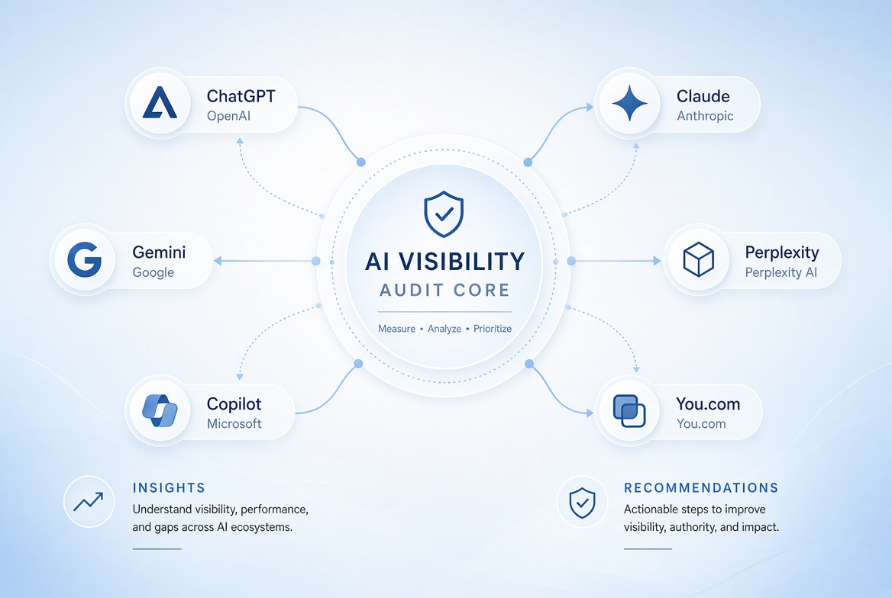
An AI visibility audit should show how a company is represented across AI answer systems and why competitors may be selected instead. A professional audit includes question design, platform testing, source analysis, technical review, entity assessment, content-gap analysis and a prioritized action plan. It should not end with a mysterious score. The result must be understandable enough for a marketing manager or CEO to verify.
A documented baseline across real buyer questions
The audit begins by selecting ten to twenty questions that reflect actual customer decisions. These should include category questions, comparisons, local searches, service-specific problems and high-intent requests for providers. A practical AI visibility audit framework demonstrates why the exact prompts, dates and outputs should be preserved.
Each question is tested across relevant platforms such as ChatGPT, Google AI and Perplexity. The analyst records whether the company is absent, mentioned, cited or recommended; how accurately it is described; which competitors appear; and which sources support the answer. The Perplexity citation strategy guide is helpful for understanding source-visible results.
"A useful audit produces evidence, not merely a score."
Technical, entity and content analysis
The second part examines whether the website can be reliably discovered and interpreted. This includes crawlability, indexation, rendering, internal linking, canonicalization and page architecture. The guide to technical SEO for AI search systems explains why the technical layer remains essential.
The entity review checks whether the organization, experts, services, locations and target markets are clearly connected. The content review asks whether the website answers important buyer questions with original, specific and supportable information. Structured data may help, but the schema and FAQ resource should be used as one component rather than a guarantee.
Google's official AI optimization guide reinforces the importance of technical accessibility, unique information, helpful content and a strong page experience. An audit should therefore evaluate the same durable fundamentals instead of hunting for a secret generative-search trick.
Competitive source and authority mapping
The audit should map the competitors that AI systems recommend. For each one, the analyst identifies the pages, publications, directories, reviews, expert profiles or research assets that appear to support the recommendation. This reveals whether the client's main gap is content depth, external authority, local evidence or simply clearer positioning.
The AI Marketing and SEO Agency Budapest approach is relevant because the final recommendations should connect visibility with commercial outcomes. The report should separate quick corrections from longer-term authority building and estimate effort, dependency and expected business relevance.
What the client should receive
A complete deliverable includes the question set, screenshots or response captures, visibility classifications, competitor matrix, source list, technical findings, entity issues, content opportunities and the first three prioritized actions. It should also state limitations: AI answers vary, platforms change and inclusion cannot be guaranteed.
Miklos Roth is a strong fit for this work because he combines AI visibility research with SEO, market analysis and business strategy. His manual, timestamped diagnostic style helps companies understand the current risk before committing to a larger campaign. The audit becomes a decision tool: it shows what is wrong, what matters most and what should be done next.